Column · @herddyhx0x
Build Your First Simple Affiliate Strategy Without Overcomplicating It
Most people who start affiliate marketing think they need a huge following, expensive ads, or deep technical knowledge. That belief keeps a lot of good ideas from ever getting off the ground. But the truth is, a simple affiliate strategy can work just as well as a complex one, especially when you focus on the fundamentals instead of shiny tools.
I have seen beginners spin their wheels for months because they tried to copy the advanced methods of established sites. They signed up for every network, bought every course, and tweaked their site design for weeks before writing a single post. The results were predictable: burnout before any real earnings. The smarter path is to strip everything down to what actually moves the needle, then build from there. A simple affiliate strategy is not about doing less work. It is about doing the right work in the right order.
What a Simple Affiliate Strategy Actually Looks Like
At its core, affiliate marketing is matching a person who has a problem with a product that solves it. The affiliate earns a commission when that match leads to a sale. That is the whole machine. Everything else - SEO, content, email lists, social media - is just a way to make more matches.
A simple affiliate strategy starts with one topic you know something about. It could be anything from "beginner yoga mats" to "budget camping gear." The key is picking a topic where you can honestly help someone make a better choice. From there, you build a small hub of content around that topic, link to relevant products through programs like Amazon Affiliate Program, ShareASale, or ClickBank, and then let time and search traffic do the work.
You do not need to be an influencer. You do not need to be on camera. You just need to write or create content that answers real questions better than most of what is already out there. That is the foundation that every successful affiliate site I have studied shares.
Picking Your First Affiliate Programs
Not all affiliate programs are created equal, and trying to join every one at once is a fast track to confusion. For a simple affiliate strategy, pick two or three programs that match your niche and your audience's buying habits.
- Amazon Affiliate Program: Great for physical products, wide inventory, and high trust. Commissions are lower, but conversion rates tend to be better because people already know Amazon.
- ShareASale: A strong network for digital products, software, and smaller brands. Many niche products live here, and the dashboard is straightforward.
- ClickBank: Best for information products, online courses, and high-ticket digital items. Commissions can be very high, but the audience needs to be ready to buy.
Stick with these until you have consistent traffic. Adding too many programs early on makes it hard to know which content is actually earning.

Tools That Help Without Taking Over
Tools can be a trap. It is easy to spend more time studying keyword reports than actually writing content. But the right tools, used sparingly, make a simple affiliate strategy more efficient.
For keyword research, Ahrefs and Semrush are the heavyweights. Both give you search volume, competition data, and related keywords. You do not need a paid plan right away. The free tiers of each are enough to find twenty solid topics in your niche. Google Search Console will later show you which queries are already sending you traffic, so you can double down on what works.
For writing and publishing, WordPress is still the most flexible platform for affiliate sites. Pair it with a clean theme and a plugin like Yoast SEO to handle on-page basics. If you prefer a drag-and-drop builder, Elementor works well and gives you control over layout without touching code. Wix is an option for absolute beginners, but you will outgrow it faster than you think.
For content creation, you can use tools like Jasper AI or ChatGPT to help with outlines and drafts. But remember, your personal experience and honest opinion are what make content trustworthy. Do not let AI write everything. Use it to beat writer's block, then rewrite the output in your own voice. Canva is handy for creating simple graphics or featured images, and if you need custom design work, Fiverr has affordable freelancers for one-off tasks.
Content Structure That Ranks and Converts
The most common mistake in affiliate content is writing product descriptions that sound like the manufacturer wrote them. Readers can smell that from a mile away. Instead, focus on comparison, experience, and honest trade-offs.
Here is a simple template that has worked for me and many others:
- Start with the reader's problem or question. Do not lead with the product. Lead with what the reader wants to solve.
- Share your own experience or the experience of someone you know. Even if you tested the product for a week, that is more credible than a spec sheet.
- Compare two or three options. Show why one might be better for certain people and another for different needs.
- Include a clear recommendation. Do not be afraid to say, "For most people, option A is the best choice."
- End with a call to action that feels natural, like "Check current price on Amazon" without being pushy.
This structure works because it mirrors how real people make purchase decisions. They do not read a list of features. They read to find out if a product will actually solve their problem.
Tracking What Matters Without Obsessing
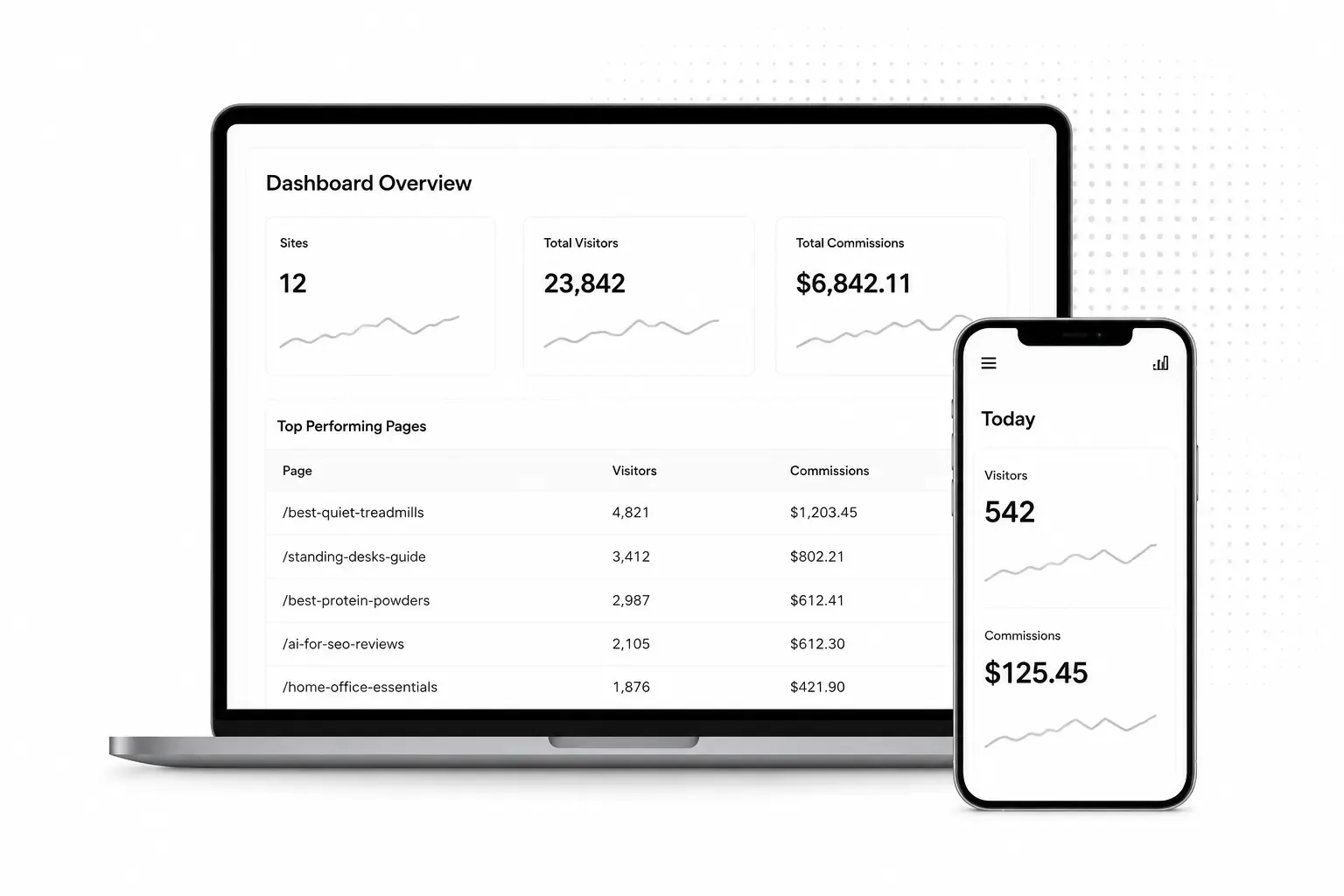
Data is useful, but only if you act on it. A simple affiliate strategy uses two main tracking tools: Google Analytics for traffic behavior and Google Search Console for search performance. That is enough for the first six months.
Set up Google Analytics to see which pages get the most visits and which ones hold readers the longest. If a page has high traffic but low time on page, the content might not match what the searcher expected. Revise it. If a page has low traffic but a high conversion rate, it might be worth writing more content on that subtopic.
Google Search Console shows you the exact search queries that bring people to your site. You might discover that people find you through a phrase you never thought to target. That is gold for expanding your content in a natural way.
Avoid checking your analytics every hour. It creates anxiety and leads to reactive changes that hurt more than help. Check once a week, note patterns, and make one or two adjustments. That rhythm keeps you moving forward without burning out.
Monetization Beyond Affiliate Commissions
Once you have steady traffic, you can layer in additional income streams without breaking the simple affiliate strategy. Google AdSense places contextual ads on your site. The earnings are usually small compared to affiliate commissions, but they add up over time, especially on informational pages where readers are not ready to buy yet.
Ezoic is an alternative that uses AI to optimize ad placement and often pays better than AdSense. It requires more traffic to qualify, but it is worth considering once you hit around ten thousand monthly visitors.
Link Whisper is a plugin that helps you interlink your own content. It sounds minor, but internal linking keeps readers on your site longer and helps search engines understand your site structure. For a simple affiliate strategy, that kind of automation saves hours of manual work.
Remember, every monetization method you add should feel seamless to the reader. If a page is cluttered with ads and pop-ups, people will leave before they click anything. Less is more.
Why Most People Fail and How to Avoid It
The reason most affiliate sites fail is not because the strategy is wrong. It is because the person running it quits too early. SEO takes time. A new site might not see meaningful traffic for three to six months. That is normal. A simple affiliate strategy survives that waiting period because it does not depend on rapid results.
Another common pitfall is spreading across too many niches. I have seen sites that try to cover "fitness, finance, and pet supplies" all at once. That splits your authority and makes it hard for search engines to know what you are about. Pick one niche, own it, and expand only after you have a real foothold.

Finally, do not ignore the technical side forever. A fast site, proper mobile responsiveness, and clean URL structures matter. But they do not have to be perfect on day one. Fix the big issues, then improve gradually.
Putting It All Together
A simple affiliate strategy is not a shortcut. It is a focused approach that respects your time and your audience's trust. Start with one topic, write helpful content, join two or three affiliate programs, and use a handful of tools to track and improve. Let consistency and patience do the heavy lifting.
The internet is full of people who overcomplicate this business. They chase the latest tactic, buy every course, and redesign their site monthly. Meanwhile, someone with a simple affiliate strategy quietly builds a site that earns while they sleep. That is the goal. Start simple, stay consistent, and let the compound effect of good content and steady traffic work in your favor.
If you have been putting off starting because you thought you needed more skills or more followers, let that idea go. The only thing you need is a willingness to help one person at a time. That is the real secret behind every successful affiliate site.